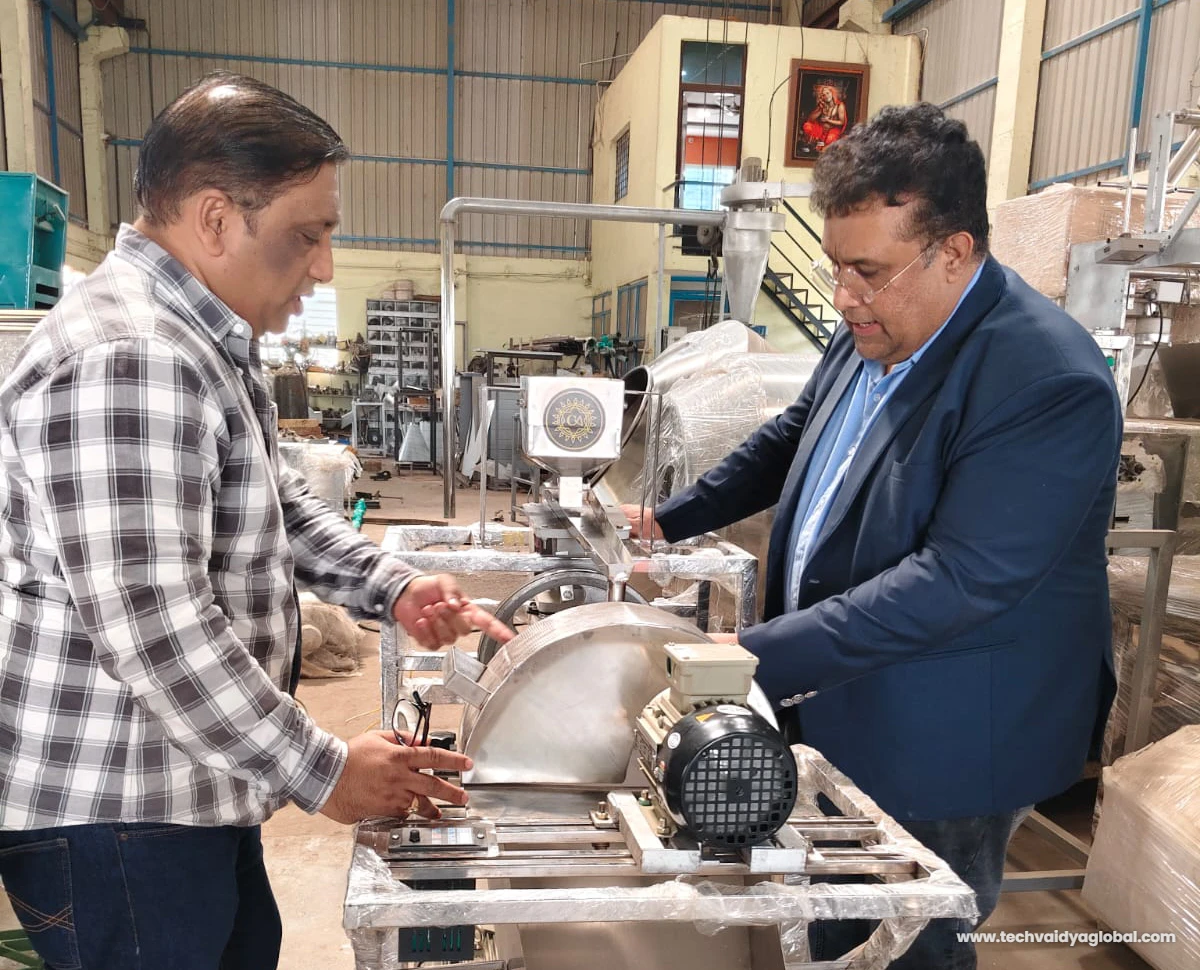
Targeting Gold: An Interview with Ranganatha Naykar of Hoysala Shooting Sports Academy
Interview by Rahul P.
For decades, the Indian sporting landscape has been disproportionately dominated by team sports like cricket and football. However, a quiet revolution has been brewing in individual disciplines, where the battle is not against an opponent, but against one's own limitations. Shooting sports, once viewed as a niche hobby reserved for the elite or defense personnel, are now finding their footing as a mainstream professional pursuit.
The transition from a recreational weekend activity to a disciplined Olympic sport requires infrastructure, expert mentorship, and a fundamental shift in mindset. Unlike field sports, shooting demands a unique blend of physical stability, mental fortitude, and technical precision. However, the ecosystem for such training—especially private infrastructure meeting international standards—has historically been scarce in India.
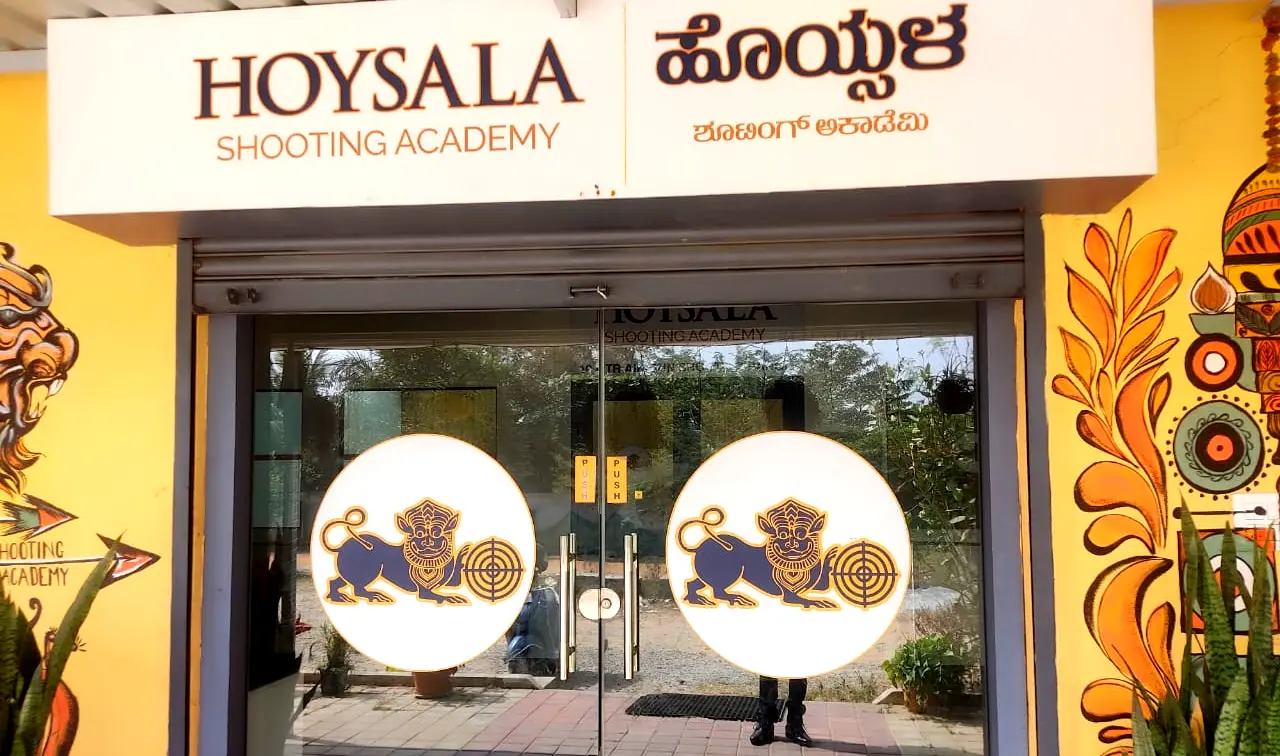
Hoysala Shooting Sports Academy emerged to fill this specific void. Born out of the passion of individuals from police and army backgrounds, it holds the distinction of being one of the first private academies in Karnataka to professionalize the sport. By moving shooting out of the "weekend hobby" category and into a daily regimen of discipline and scientific training, they are nurturing a new generation of marksmen.
Ranganatha Naykar, a core member and driving force behind Hoysala Shooting Sports Academy, sat down to discuss the journey of setting up a world-class facility, the role of technology in modern coaching, and why shooting is the ultimate test of mental strength.
Rahul: Can you briefly introduce yourself and tell us why you started this shooting sports academy?
Ranganatha Naykar: I am a core member of Hoysala Shooting Sports Academy. We were among the pioneers to establish a private shooting academy in Karnataka. Back in 2009–2010, many of us from Karnataka State Police and Army families used to practice at the Karnataka State Rifle Association. At that time, shooting was still considered a weekend recreational activity. However, we strongly felt that it should be treated as a professional sport requiring daily practice. That conviction led us to start the first private academy in Karnataka, initially called Nishan Shooting Sports Academy. Our aim was to democratize access to the sport with a dedicated range that allowed training from morning to evening. Later, honoring our roots, we renamed it Hoysala Shooting Sports Academy. Today, we train enthusiasts aged 9 to 90—from absolute beginners to athletes aiming for National and Olympic levels in air pistol and air rifle categories.
Rahul: When you planned this academy, what gap or problem in shooting sports did you want to address?
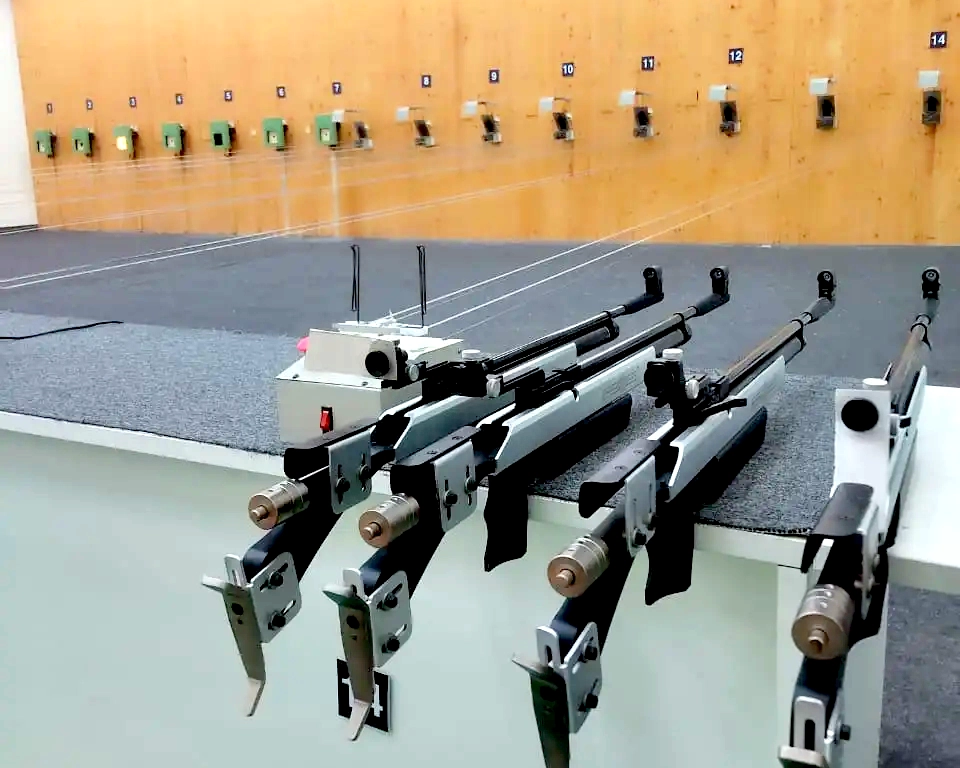
Ranganatha Naykar: Shooting sports were not very popular in India, and specifically in Karnataka, primarily due to a lack of accessible facilities and awareness. The cultural inclination was heavily skewed towards cricket, football, and hockey. We wanted to highlight that shooting and archery are unique disciplines where the competition is between the individual and the target, not an external opponent. We also noticed that many existing private ranges did not meet Olympic or international specifications. Additionally, the sport is capital-intensive since equipment like pellets, air pistols, and rifles are imported. Despite high real estate costs in Bengaluru and these logistical challenges, we were determined to create a professional ecosystem to train athletes from the state level up to the Olympics. Our team’s strong background in national-level shooting gave us the confidence to bridge this gap.
Rahul: What is the fundamental difference between archery and shooting sports regarding infrastructure?
Ranganatha Naykar: The primary difference lies in the range distance and environment. Shooting sports have specific categories such as 10-meter, 25-meter, 50-meter, and 100-meter events. In India, most private academies focus on setting up 10-meter air rifle and air pistol ranges because longer ranges (25m and above) usually require expansive state or central government facilities. Crucially, shooting is generally an indoor sport requiring controlled lighting and wind conditions. Archery, on the other hand, involves longer distances like 30 or 70 meters and is predominantly an outdoor activity. This makes shooting more suitable for urban, indoor professional training setups.
Rahul: As an owner, what responsibilities do you personally handle at the academy?
Ranganatha Naykar: Since all of us come from a shooting background—I personally represented the state in the NCC in 1998—we are hands-on with the operations. We don't just manage; we train. Students follow structured programs ranging from a one-month basic course to six months of advanced training, and eventually, a year-long professional regimen for those targeting state or national competitions. We handle the entire lifecycle of an athlete, from designing daily training schedules to competition preparation and logistics.
Rahul: What core values do you try to build in your academy?
Ranganatha Naykar: Interestingly, many parents initially bring their children here to detach them from mobile phones and digital distractions. Over time, however, the sport transforms them. Shooting instills immense discipline, focus, and confidence. It improves concentration, eyesight, and mental resilience. We foster a competitive spirit through internal bi-weekly matches and encourage participation in inter-academy, state, CBSE, and university-level competitions. Our routine includes warm-ups, meditation, technical practice, and cooldown sessions. This disciplined approach often spills over into their academics as well. For working professionals, it serves as a powerful stress-relief mechanism and a constructive hobby.
Rahul: Shooting requires immense focus. How do you help students develop this mindset?
Ranganatha Naykar: Shooting is a progressive journey. Beginners start by understanding the weapon, posture, and breathing techniques. Once the fundamentals are set, we train them to maintain focus under pressure—for instance, firing a set number of shots within a fixed time limit. Beyond technical skills, we emphasize holistic development. We incorporate yoga, nutrition planning, meditation, and mental conditioning. Competition pressure is very different from practice comfort; therefore, we provide specific mental training to help athletes handle match-day nerves. Over a period of six to eight months, this approach builds a confident, professional athlete.
Rahul: What were the biggest challenges you faced while setting up this academy?
Ranganatha Naykar: The biggest hurdle was infrastructure. Building a range that adheres to Olympic standards requires specific ceiling heights and lane dimensions, which is difficult in a city like Bengaluru. Sourcing equipment was another barrier, as high-quality air pistols, rifles, and pellets are not manufactured in India and must be imported. Finding qualified coaching staff was also a challenge. Additionally, since Bengaluru is a melting pot of cultures, overcoming language barriers with diverse students took time. However, consistency and passion helped us resolve these issues over the years.
Rahul: Shooting sports involve weapons. How do you ensure safety and ethical practices?
Ranganatha Naykar: Safety is non-negotiable. The shooting range is a restricted area accessible only to students and coaches. We follow a strict command protocol—coaches explicitly control when to load and fire. Before touching a weapon, every student undergoes mandatory safety classes and mock sessions. Safety guidelines are prominently displayed, and first-aid facilities are always at hand. We are also fortunate to be located near a hospital for emergencies. Furthermore, our location near a lake, away from city traffic, helps maintain the calm, focused environment necessary for safe practice.
Rahul: What role does technology play in your academy?
Ranganatha Naykar: We leverage advanced technology to refine performance. A key tool we use is the SCATT system, an optical sensor that tracks the weapon’s trajectory. It allows us to analyze the shooter’s stability and trace micro-movements of the hand before and after the shot. We are also developing AI-based software that compares a student’s posture and angles with those of Olympic shooters using video analysis. This helps us identify biomechanical corrections that are often invisible to the naked eye.
Rahul: Do you see technology changing the future of shooting sports training?
Ranganatha Naykar: Absolutely. Just as cricket uses ball-tracking and analytics, shooting is becoming increasingly data-driven. Technology allows us to analyze breathing patterns, trigger timing, posture, and body alignment with precision. Since every shooter has a unique physical profile, training must be personalized. We are even experimenting with fingerprint analysis to understand the innate personality traits of shooters, allowing us to tailor our coaching communication effectively. We believe this scientific approach is the future of the sport.
Rahul: What kind of impact do you want this academy to have on students and society?
Ranganatha Naykar: Our primary goal is to produce champions at the state, national, and international levels. Beyond medals, shooting sports open significant career pathways through sports quotas in education and government jobs. We already have students who have secured engineering and medical seats through these quotas. We want to inspire more young people to take up the sport and represent Karnataka and India on the global stage.
Rahul: What advice would you give young students who want to take shooting sports seriously?
Ranganatha Naykar: There is a misconception that shooting requires brute physical strength. In reality, it is a sport of mental fortitude, consistency, and self-improvement. It is an individual journey where your toughest competitor is yourself. With the right training, a student can reach state-level competency within six to eight months. Moreover, it is a sport with no age barrier—we have active members over 60. I strongly encourage young students to look beyond traditional sports and consider shooting as a serious, long-term pursuit.
Rahul: Finally, what is your long-term vision for the academy?
Ranganatha Naykar: Our vision is clear: to mold national and international shooters, including future Olympians. We aim to popularize shooting sports across every district of Karnataka and eventually expand our footprint to other regions, ensuring that world-class training standards are accessible to all.
For further information contact +91-7625066616, +91-9900231787
Click here to know more aboutHoysala Shooting Sports Academy
No Comment Yet.
Stay informed with breaking news, trending stories, and in-depth analysis.