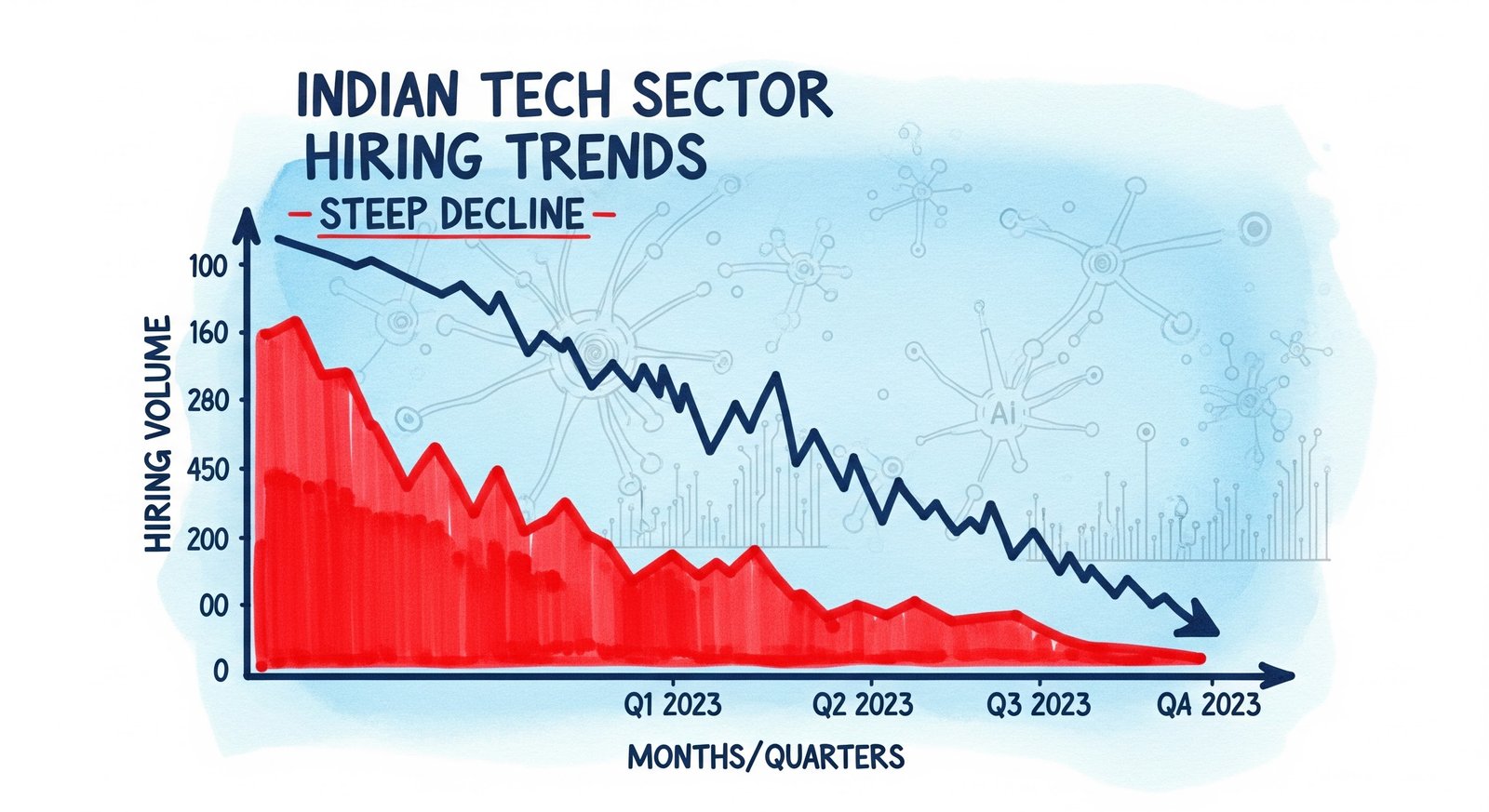
India's technology sector which serves as a cornerstone of the nation's economy by contributing over eight percent to the GDP and employing millions has entered 2026 amidst a protracted hiring slowdown. According to the Active Tech Jobs Outlook report from specialist staffing firm Xpheno active tech job openings stood at approximately 103000 in January 2026. This represents a twenty four percent year on year decline from the estimated 135500 openings in January 2025 and a slight one percent dip from December 2025. This current figure marks the second lowest level recorded since January 2021 and sits nearly sixty percent below the post pandemic peak of over 260000 openings seen in early 2022. What began as a correction following the pandemic has evolved into a structural transformation driven by the adoption of artificial intelligence geopolitical uncertainties and shifting global demand.
The downturn in tech hiring is not a sudden anomaly but rather the culmination of several interconnected factors that have intensified since late 2022. One primary driver is efficiency gains led by artificial intelligence which is automating routine tasks and reducing the need for entry and mid level roles in legacy IT services. Indian IT stocks have reflected this trend with the Nifty IT index falling over ten percent in 2025 as companies leverage AI to boost margins while curbing headcount growth. Reports indicate that AI has shifted from pilot programs to scalable implementations which has limited revenue growth in traditional services. During the third quarter of 2025 the tech sector saw a twenty five percent contraction in hiring as the focus pivoted toward specialized lateral talent in AI and machine learning.
Global demand and geopolitical pressures have also played a significant role in this multifaceted crisis. Weak discretionary spending from clients in the United States and Europe due to inflation and economic slowdowns has curtailed project pipelines. Data shows that the tech sector's share of India's total active talent demand hovered between forty eight and forty nine percent in late 2025 which is a sharp decline from eighty four percent in 2022. While major firms like Meta Apple Google Amazon Microsoft and Netflix added thirty two thousand jobs in India during 2025 this was offset by global layoffs exceeding 122500 people. This highlights a shift toward cost effective offshore talent even as companies navigate H-1B visa restrictions.
Looking at the historical progression the decline has been steady and significant. After the peak of 260000 openings in January 2022 the market reached 135500 by January 2025. By June 2025 openings fell to 112000 and continued to slide through the year. August saw a sixteen percent year on year drop while September and October recorded declines of twenty four percent and twenty seven percent respectively. November 2025 marked a twenty eight percent decrease bringing the talent share below fifty percent. The final figure of 103000 in January 2026 underscores the reality of this no normal phase where companies prioritize upskilling existing staff over mass recruitment.
Despite the broad weakness certain niches have shown resilience. Global Capability Centers have bucked the general trend by driving a fifteen to seventeen percent increase in demand for specialized roles in 2025. Leadership hiring in these centers rose by seven point seven percent compared to just two point four percent in general IT services. By the fourth quarter of fiscal year 2026 nearly half of these centers planned expansions with a focus on high value work in AI cloud and cybersecurity. At the role level entry level positions saw a modest eight percent monthly increase in January 2026 but remain eighteen percent lower than the previous year which exacerbates challenges for fresh graduates. Meanwhile mentions of AI in job postings climbed to nearly twelve percent by late 2025 signaling a clear demand for niche skills.
Geographic shifts are also becoming evident as Tier 1 cities like Bengaluru experienced a forty nine percent year on year plunge in hiring while Tier 2 and Tier 3 locations grew by thirty percent. This indicates a decentralization of the industry. Additionally work from office roles now exceed seventy percent as hybrid and remote options continue to wane. In contrast non tech sectors like manufacturing and financial services have outpaced the tech industry with overall Indian hiring increasing by ten percent in late 2025.
The shift in hiring has also exposed the growing limitations of the traditional engineering education system in India. For decades the industry relied on mass campus recruitment to fill entry level roles but the sudden demand for niche AI and data science skills has left thousands of new graduates with qualifications that are increasingly seen as obsolete. Edtech platforms that once promised guaranteed placements are now struggling to maintain relevance and are pivoting toward high end executive reskilling programs. This educational gap is forcing companies to invest more in internal training academies rather than looking for job ready candidates in the open market.
Beyond the purely economic and educational data the psychological toll on the workforce is becoming a significant concern for human resource departments across the country. The combination of sustained job insecurity and the staggering pace of technological change has led to increased levels of burnout and anxiety among mid level professionals who fear being replaced by automated tools. Companies are now being urged to integrate mental health support and career coaching into their organizational culture to retain the specialized talent they already have. The era of job hopping for massive salary hikes has been replaced by a quest for stability and role longevity.
A notable side effect of the hiring freeze in permanent corporate roles is the surge in the high end gig economy and independent consulting. Many experienced developers and cloud architects are choosing to work on a project to project basis for global startups rather than waiting for vacancies in large Indian IT firms. This trend of fractional leadership where a single expert provides high level strategy to multiple small companies is creating a more fragmented but flexible labor market. This shift allows seasoned professionals to maintain their income levels while companies get access to expertise without the long term overhead of a full time senior salary.
The Indian government is responding to these structural shifts by doubling down on initiatives like the IndiaAI mission and updated vocational skilling frameworks. There is a concerted effort to align training programs with the specific needs of the 2026 job market particularly in fields like semiconductor design green technology and quantum computing. These policy interventions are seen as crucial if the nation aims to transition from being a back office service hub to a global leader in original innovation and intellectual property. The success of these programs will determine whether the current slowdown is a temporary hurdle or a long term decline.
Furthermore the decentralization of the tech workforce to Tier 2 and Tier 3 cities is no longer just a cost saving measure but a strategic move to access a more stable and loyal talent pool. As major hubs like Bengaluru and Hyderabad face increasing infrastructure challenges and high living costs cities like Mysuru Kochi and Indore are emerging as viable tech destinations. This movement is helping to balance regional economic growth while offering employees a better quality of life and shorter commute times. This geographic rebalancing is likely to be one of the most permanent and positive legacies of the current hiring slump.
Ultimately the 2026 hiring slump may be viewed by future historians as the necessary growing pains of a maturing industry undergoing a fundamental reset. While the era of easy mass employment in general IT services appears to be over the potential for high value growth in specialized sectors remains immense. The resilience of India's tech sector will depend on its ability to embrace the AI revolution as a collaborative partner rather than a replacement threat. As the year progresses strategic adaptations at both the individual and corporate levels will be essential to navigate this new landscape and position the nation for sustainable growth in the decades to come.

No Comment Yet.
Stay informed with breaking news, trending stories, and in-depth analysis.