We need to talk about the dark ages of the Smart Home. You remember it, right?
Rewind just a few years to 2022 or 2023. You would walk into a Best Buy or browse Amazon, and you would see a smart light bulb. It looked great. It was cheap. But then you had to flip the box over and squint at the tiny logos on the back.
Does it work with Alexa? Yes.
Does it work with Google Home? Maybe.
Does it work with Apple HomeKit? Absolutely not, unless you buy a specific expensive hub that costs more than the bulb itself.
It was a nightmare. We were forced to pick a "team." If you were an iPhone family, you had to buy expensive HomeKit gear. If you were an Android family, you bought Google stuff. And if you made the mistake of marrying someone from the opposing team? Well, good luck explaining why they couldn't turn on the kitchen lights with their voice.
But here we are in 2026, and that war is largely over. The reason is a little triangular logo that you now see on almost every box: Matter.
If you have been holding off on making your home "smart" because it felt too complicated or too buggy, I have good news. The wait is over. Matter isn't just another tech standard; it is the peace treaty we have all been waiting for.
What Actually Is Matter?
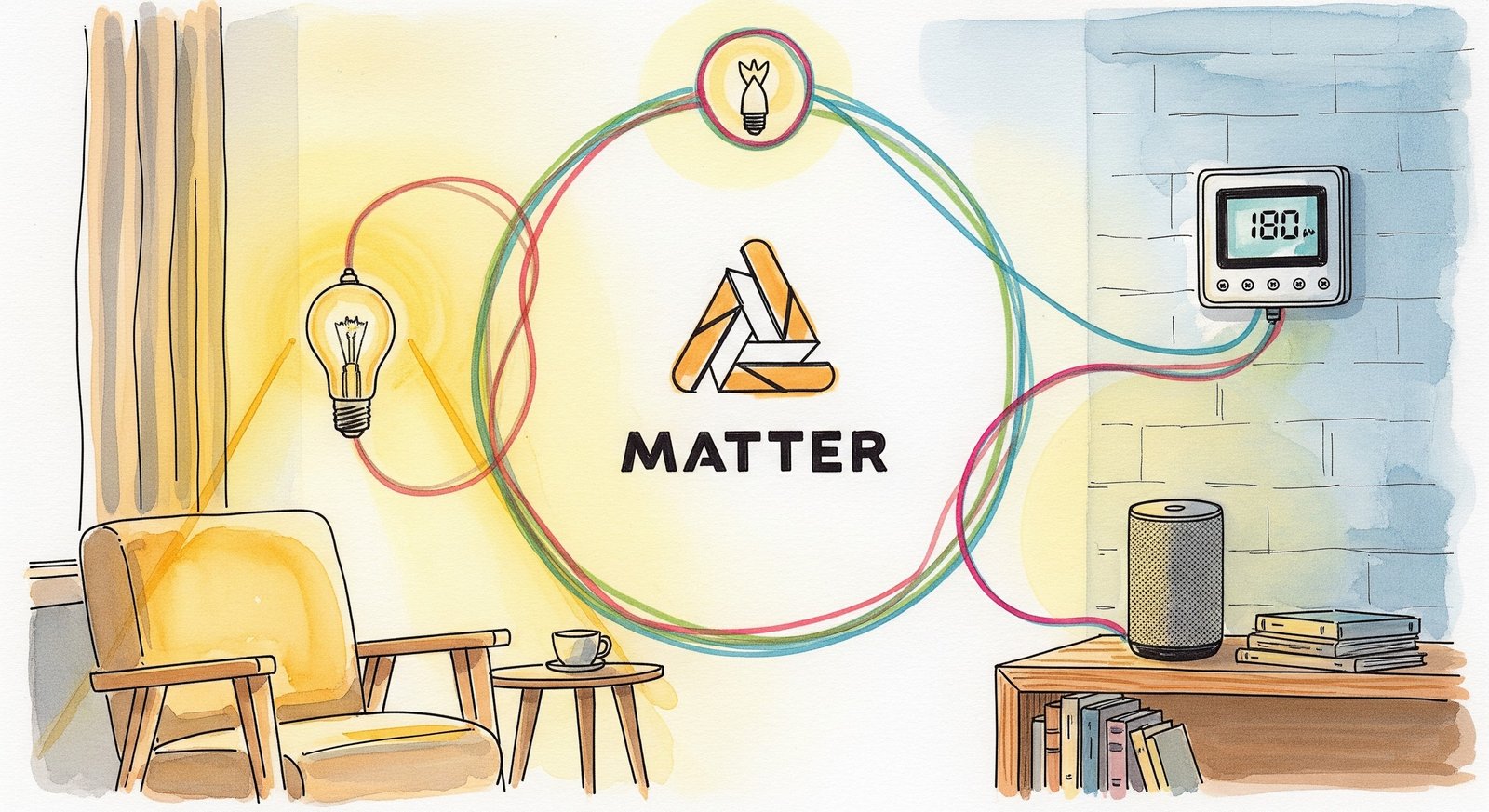
Let’s strip away the nerdy marketing speak. Matter is a language.
Before Matter, a smart plug from Company A spoke "Zigbee," a bulb from Company B spoke "Wi-Fi," and a sensor from Company C spoke "Bluetooth." They all needed different apps and different translators (hubs) to talk to your phone. It was a Tower of Babel situation.
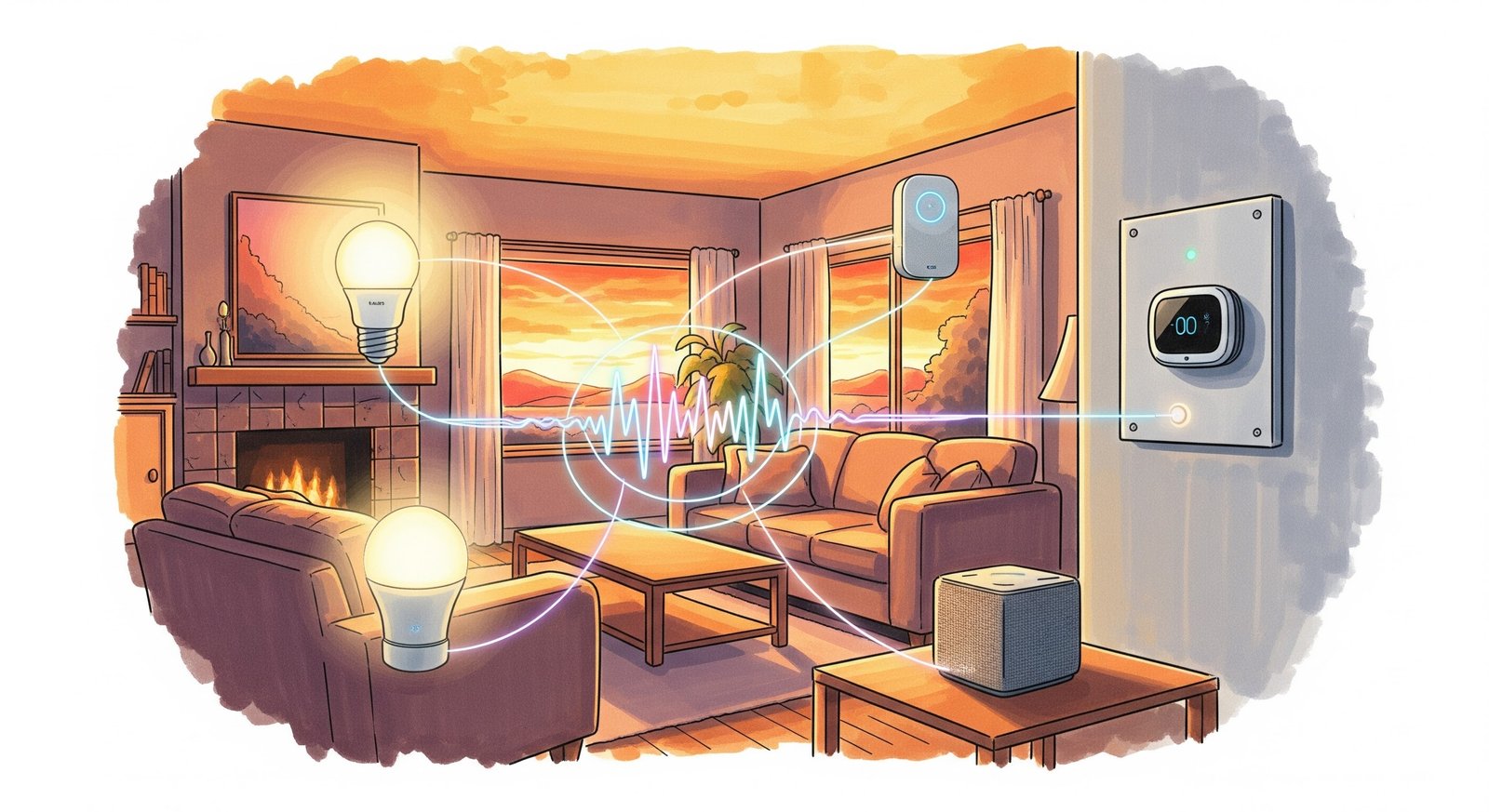
Matter creates a universal language that everyone—Apple, Google, Amazon, Samsung, and even the cheap knock-off brands—agreed to speak.
In 2026, when you buy a device with the Matter logo, you don't have to check compatibility. It just works. You can set it up using your iPhone. Your partner can control it using their Samsung Galaxy. Your kids can yell at the Amazon Echo to turn it off. It doesn't care. It is platform-agnostic.
The "Magic" of Setup
The dopamine hit of buying a new gadget used to be ruined by the setup process. downloading a sketchy app, creating a new account, verifying your email, connecting to a weird temporary Wi-Fi network... it was exhausting.
With Matter, the friction is gone. It feels like magic.
You scan a QR code on the device. Your phone says, "Add this light?" You say yes. That is it.
Because Matter runs locally on your network, it doesn't need to ping a server in China or California just to turn a light on. This means two things: Speed and Reliability.
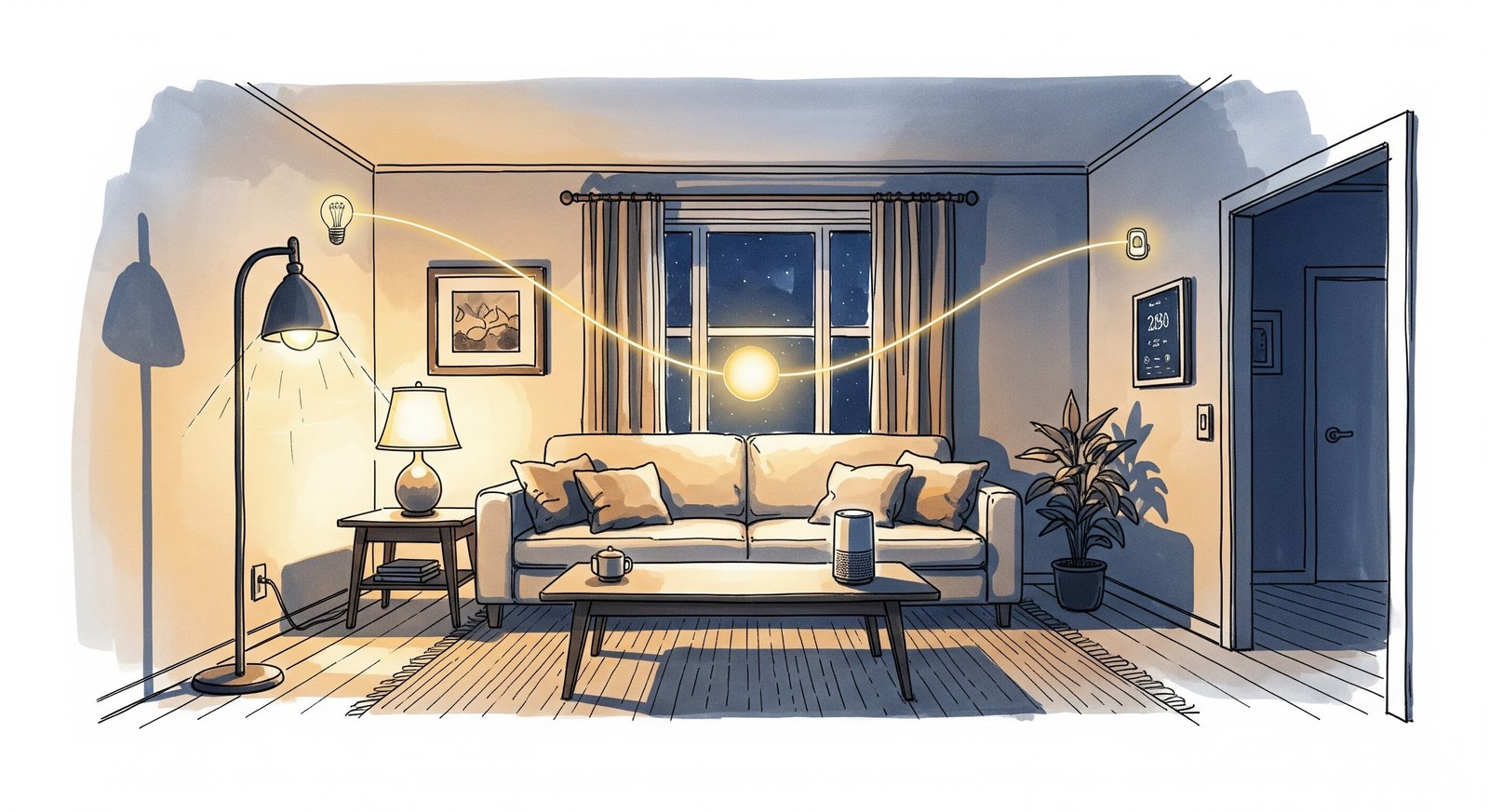
When you tap "On" in the app, the light turns on instantly. Not after a two-second delay. Instantly. And if your internet goes down? Your smart home still works. The switches still talk to the bulbs because they are chatting directly to each other inside your house, not routing through the cloud.
The Secret Weapon: Thread
Matter is the language, but "Thread" is the way it travels. You will hear these two words together a lot: "Matter over Thread."
Think of your home Wi-Fi as a busy highway. You have your TV streaming 8K Netflix, your laptop on a Zoom call, and your kids playing video games. It is congested. If you add 50 smart bulbs to that highway, traffic jams happen. The internet gets slow. The bulbs stop responding.
Thread is like building a dedicated bike lane just for your smart home devices.
Thread devices create a "Mesh Network." This means every device you plug in—like a smart plug or a light switch—acts as a mini-tower that boosts the signal to the next device. The more devices you add, the stronger your network gets. It is the opposite of Wi-Fi, which gets weaker the more you add.
In 2026, you don't even need to buy a special "hub" anymore because you probably already own one. Your Apple TV 4K is a hub. Your Amazon Echo Show is a hub. Your Google Nest Wifi router is a hub. They act as "Border Routers" that connect the Thread bike lane to the main internet highway.
The Multi-Admin Dream
Here is my favorite feature, and the one that truly saved my marriage. It is called "Multi-Admin."
In the old days, if I set up a smart lock in the Apple Home app, my wife couldn't see it in her Google Home app. She was locked out of the controls.
With Matter, you can add a device to multiple ecosystems simultaneously. I can control the thermostat with Siri. She can control the same thermostat with Google Assistant. We can even have a dedicated tablet on the wall running Amazon Alexa. The device status updates across all of them in real-time.
Is Everything Perfect? (The Reality Check)
Look, I am a tech optimist, but I am not a liar. Is Matter perfect in 2026? Mostly, but there are still quirks.
The biggest issue right now is "feature parity." Matter is great for the basics: On/Off, Brightness, Color, Lock/Unlock, Temperature. But some devices have fancy, proprietary features that Matter doesn't understand yet.
For example, I have a fancy Nanoleaf light panel. Through Matter, I can change the colors and brightness perfectly. But if I want to use the "Rhythm" feature where the lights dance to music? I still have to use the specific Nanoleaf app. The standard features are universal, but the "cool" extra stuff sometimes requires the original app.
Also, we have to talk about the cheap stuff. While Matter has a certification process, some extremely cheap devices from random brands on Amazon can still be a bit flaky during the initial pairing. They work eventually, but you might have to try the code twice. It's a small price to pay for not paying the "brand tax," but it is something to keep in mind.
Privacy: The Hidden Benefit
We are all a little paranoid about our smart homes spying on us. And rightly so.
One of the most underrated aspects of Matter is that it is designed to run locally.
Because your door lock isn't constantly talking to a manufacturer's cloud server, there is less opportunity for hackers to intercept that data remotely. You aren't creating a login and password for every single light bulb brand you buy. You are keeping the credentials within Apple, Google, or Amazon—companies that, for all their faults, have much better security teams than a random smart plug startup.
The Verdict: Is It Time to Buy?
If you have been sitting on the fence, 2026 is the year to jump in. The "Early Adopter" phase is over. We are now in the "Mass Adoption" phase.
You dont need to research compatibility charts anymore. You don't need to worry if you switch from iPhone to Android next year. The hardware you buy today is an investment that will actually last.
Start small. Buy a Matter-compatible smart plug for your coffee maker. Buy a couple of Matter light bulbs for the living room. Experience that instant response time. Watch how they set up in seconds.
Once you feel that ease—that dopamine hit of technology actually doing what it is supposed to do without a fight—you will understand. The smart home isn't just for nerds anymore. It is finally for everyone. And frankly, it is about time.

No Comment Yet.
Stay informed with breaking news, trending stories, and in-depth analysis.