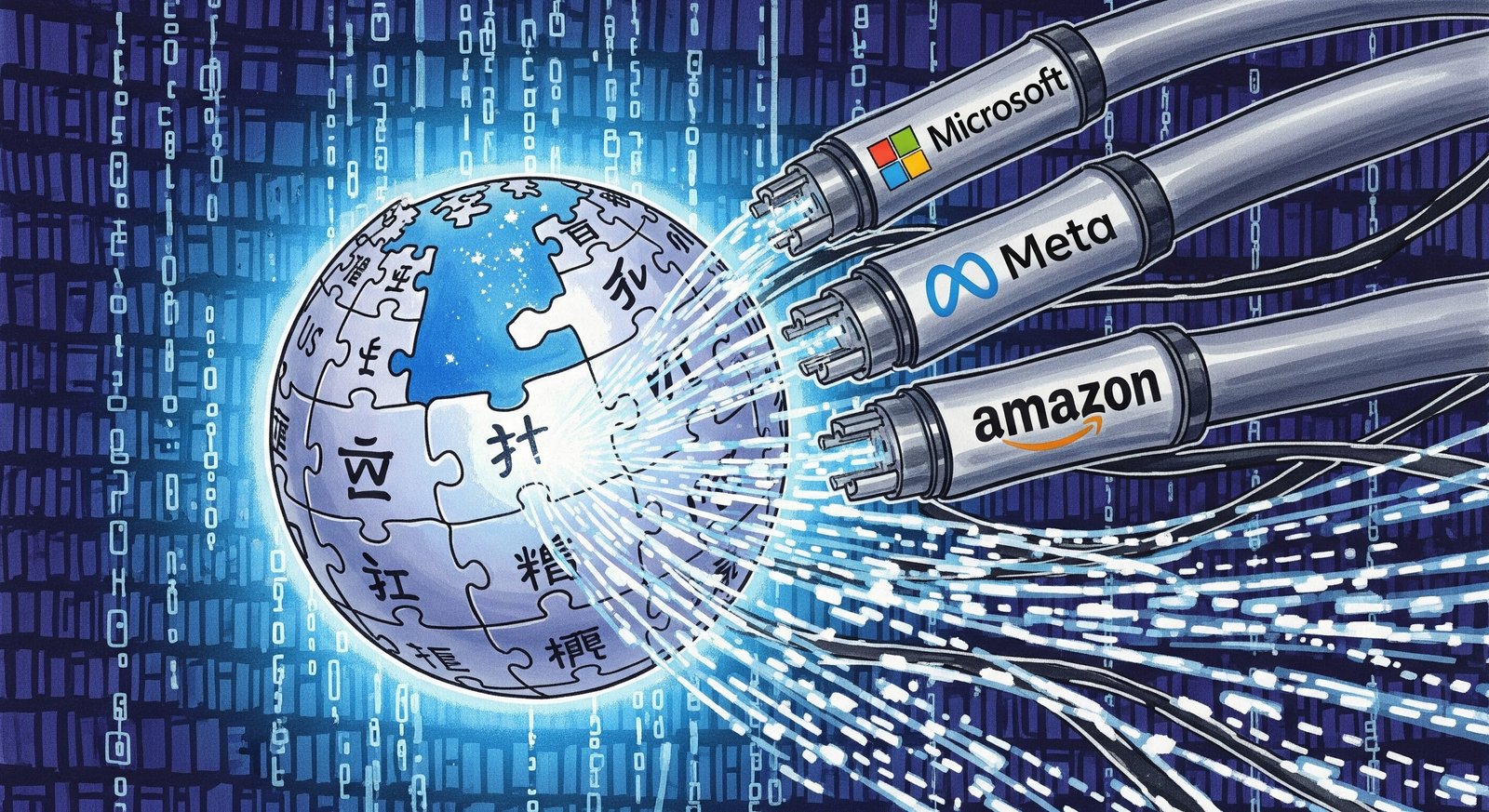
Since our school days, whenever we needed information, the first place we looked was Wikipedia. It’s the world's largest open encyclopedia. Information is free, written by volunteers, and read by billions. However, in the age of Generative AI and Large Language Models (LLMs), the definition of "free" is changing rapidly. The Wikimedia Foundation, the non-profit behind Wikipedia, has signed landmark agreements with US tech giants Microsoft, Meta (Facebook), and Amazon. This development marks a new chapter in the history of the open internet.
What is the Deal? The Background: For years, companies like Google, OpenAI, and Amazon have been using Wikipedia’s vast repository of knowledge to train their AI models without paying a dime. This practice is known as web scraping. They would download text from Wikipedia to feed their algorithms, which was technically legal under the Creative Commons license.
But things are different now. AI companies don't just need data; they need it fast, accurate, and structured. Recognizing this need, the Foundation launched "Wikimedia Enterprise." Under this new agreement, Microsoft, Meta, and Amazon will pay for high-volume, commercial API access to get Wikipedia content directly and efficiently.
Why Pay When You Can Scrape?: As a regular user, you visit the website to read. But an AI model needs to process millions of article updates per second. For example, if a famous celebrity passes away, Wikipedia updates instantly. For an AI like ChatGPT or Meta Llama to know this immediately, scraping isn't reliable enough. Through Wikimedia Enterprise, these tech giants get a clean, formatted data feed. This reduces the load on Wikipedia's servers and helps prevent AI hallucinations (where AI makes up false info) by providing a reliable ground truth.
Did Wikipedia Just Sell Out?: This is the big question on everyone's mind. But the Wikimedia Foundation has denied this, pointing to some strict conditions in the contract:
Editorial Independence: Just because Microsoft or Amazon is paying, they don't get to dictate what goes into an article. The content control remains 100% with the volunteer community.
Open Access: For general users like us, Wikipedia remains completely free. There will be no paywall.
Attribution: When these AI models use Wikipedia data, they are encouraged to credit the source, respecting the open knowledge model.
Where Will the Money Go?: Wikipedia is ad-free. It runs on donations from people like you and me. But as the site grows, server costs are skyrocketing. The revenue from these Big Tech deals will strengthen the Foundation’s financial stability. More importantly, they have stated that this money will be used to support non-English, regional language projects and improve technical infrastructure. Its a move towards decentralizing knowledge.
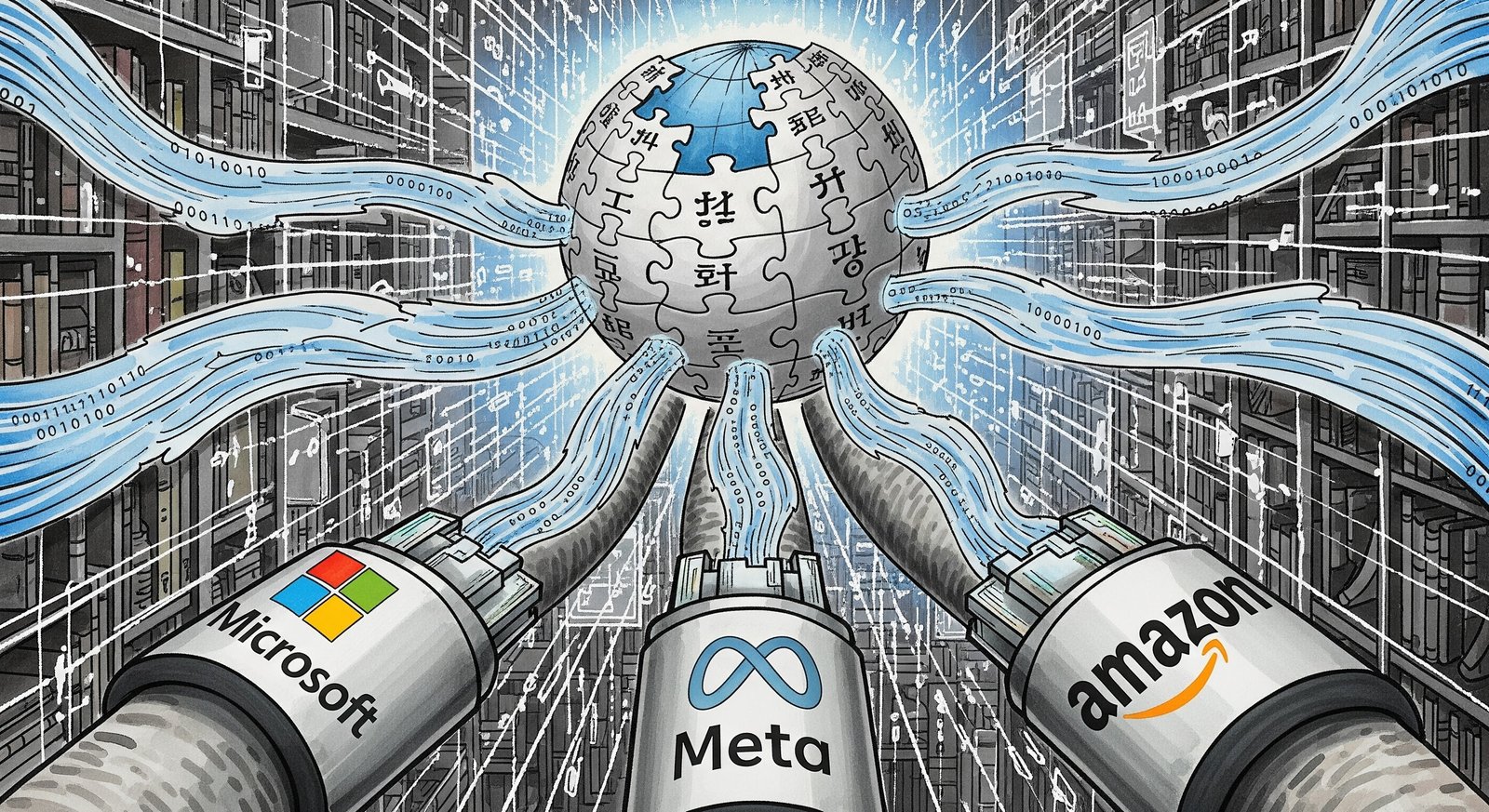
A Necessary Evolution: Honestly, I think this is a pragmatic move. When the world's wealthiest companies (Big Tech) are building trillion-dollar empires using data from a non-profit, it is only fair that they contribute back. Its not fair if they take everything for free.
This decision by the Wikimedia Foundation upholds "Data Dignity" in the AI era. It also sets a precedent for other content creators. After the New York Times and Reddit made similar moves, Wikipedia has now joined the league of platforms demanding royalties for their data. In the future, this might even pave the way for bloggers and YouTubers to get paid when AI uses their content. At the end of the day, knowledge should be free, but the servers hosting that knowledge cost money. This deal strikes a balance between financial sustainability and open source ideals.

No Comment Yet.
Stay informed with breaking news, trending stories, and in-depth analysis.